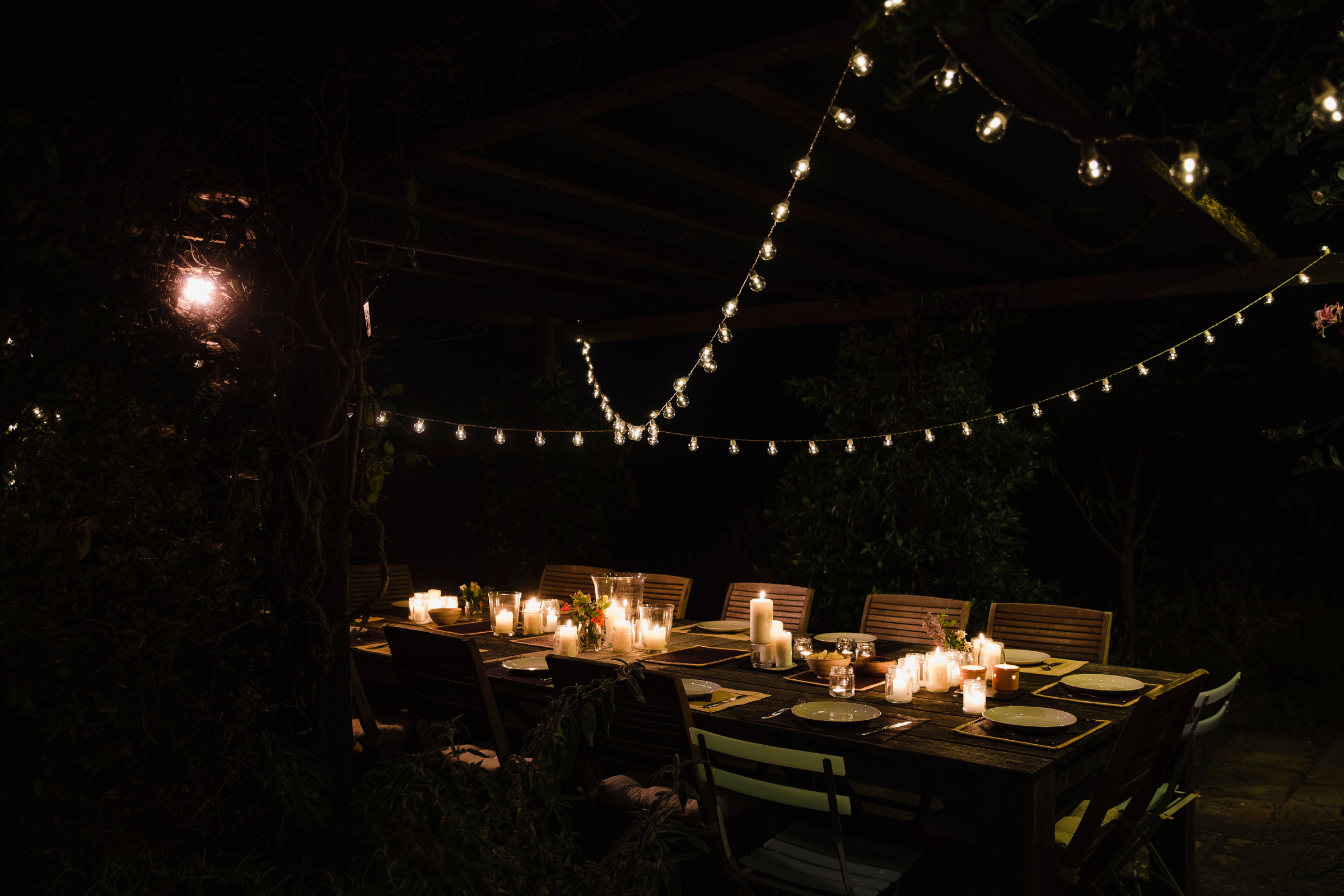
Friday was a practice
When did somebody last have you round? Not a restaurant, not a birthday with a booking — someone’s actual kitchen, on an ordinary evening, because they felt like it.
Take your time.
Half of Americans used to do that every month. That was 1975, and it has been falling ever since, which is the part worth sitting with: fifty years is long enough to rule out your phone, your group chat, your commute and everything else we like to blame. Derek Thompson went back over the numbers in The Atlantic this month. We did not fall out of the habit recently. We have been falling out of it since flares.
But the more interesting question is not how much. It is which night.
The night that went quiet
Someone went looking at when people actually see their friends across a week, and found the shape of it used to be a heartbeat: a small pulse every weekday evening, then two good thumps on Friday and Saturday. Saturday is still thumping. Friday has flattened out. The day people thank God for, the one with its own songs, now looks like a Tuesday — which Julie Beck wrote about a few weeks ago, and which I have not stopped thinking about since.
Here is the cheering part.
Friday was never anything in itself. Days and years have the sun to answer to; the week has nothing but us. We made it up, and we made up what each day means — we decided Monday was grim, and we decided Friday was Friday by doing things on it. When the doing stopped, the day went quiet. That is all that happened. No generation failed, no character was lost.
It was a practice. And a practice is the easiest thing in the world to start again.
You do not decide a day should mean something. You do something on it until it does.
Pick a night and keep it
The hosts who still do this often are not richer, calmer or better cooked-for. They have one thing in common: their evening has a slot.
The first Sunday. The last Thursday. Every other Tuesday. Which night barely matters — what matters is that it comes round again, because then nobody has to be talked into anything. It stops being a proposal weighed against other plans and becomes a fact people arrange themselves around. The invitation shrinks from a negotiation to a text saying you know what tonight is.
Three things keep a slot alive.
Keep it to six. Six is a conversation. Fourteen is a function. Six people fit in your head; the moment a gathering stops fitting in your head it starts needing to be run.
Decide the food once. One thing, made well, made so often it has stopped being a decision. The host who does the same braise every single time is not short of ideas. They have worked out which part of the evening is worth their attention.
Stop apologising for the room. The flat is small, the chairs do not match, the kitchen is the kitchen. Everyone who still has people over gave up apologising for this years ago, and honestly it is the biggest single thing available to you.
But isn't the fuss the point?
There is a good argument that it is. Julie Beck, again, took the line inconvenience is the cost of community and turned it over: community, she wrote, is all too often the cost of convenience. Make everything frictionless and you can smooth away the very things that hold people together.
I think she is right, and I want to be careful with it, because we make a thing that takes work out of hosting.
So, carefully: there are two kinds of faff, and only one of them is the friendship.
Cooking for six when you could have cooked for one. Giving up the evening. The washing-up at midnight. Driving across town because it is easier for them. That is not overhead — that is the thing, and nobody was ever moved by a party that cost the host nothing.
Then there is the other kind. Chasing four people for an answer. Typing your address into nine separate messages. Remembering at eleven at night that someone went vegetarian in March. Working out whether maybe means no.
Nobody has ever felt closer to a friend for having chased them for an RSVP.
And it is that second kind that stops people — at which point they pay neither. Give up the Thursday and you do not get an easier friendship. You get a Thursday on your own, and the cooking and the washing-up that would have been worth something never happen either.
Where we come in, once
All of the above works with a notebook, and did for about four hundred years.
What a notebook cannot do is answer someone at eleven at night about where to park, keep your address off a forwarded screenshot until the day, or notice that the one person you really wanted there has not replied. Coterie does those three. All three are the second kind.
It does not cook, and it does not choose who comes. It will not make your evening effortless, and we would not build it if it did.
So pick a night. Not Friday unless you want it — the day has no opinion. Make the thing you already know how to make, leave the room as it is, and be inconvenienced by the cooking, which was always the part worth paying for.
Friday was a practice. So is whatever you choose instead.